


Sleep, Pain, and Neurodegeneration: A Mendelian Randomization Study
Source : https://www.frontiersin.org/articles/10.3389/fneur.2022.765321/full
Our aim was to determine whether the genetic liability to sleep and pain-related traits have a causal effect on risk of neurodegeneration in individuals of predominantly European ancestry. We selected five neurodegenerative disorders, namely, age-related macular degeneration (AMD), Alzheimer's disease (AD), amyotrophic lateral sclerosis (ALS), multiple sclerosis (MS), and Parkinson's disease (PD).
Relevance: Our aim was to determine whether the genetic liability to sleep and pain-related traits have a causal effect on risk of neurodegeneration in individuals of predominantly European ancestry.
Patients with neurodegenerative diseases (NDDs) often experience disruptions in circadian rhythmic activities
• Source: Frontiers in Neurology
• Relevance: “The use of GWAS data in MR [Mendelian randomization]-based approaches has opened up opportunities to assess and define clinically relevant signatures for a diverse spectrum of diseases … Our aim was to determine whether the genetic liability to sleep and pain-related traits have a causal effect on risk of neurodegeneration in individuals of predominantly European ancestry. We selected five neurodegenerative disorders, namely, age-related macular degeneration (AMD), Alzheimer's disease (AD), amyotrophic lateral sclerosis (ALS), multiple sclerosis (MS), and Parkinson's disease (PD). Sleep duration (SD), short sleep (SS), long sleep (LS), chronotype (CHR), morning person (MP), insomnia (INS), and multisite chronic pain (MCP) were considered as exposures.”
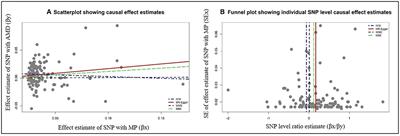
• The authors of this study suggested that an individual’s circadian rhythm plays a role in neurodegeneration. They found that AMD and CHR were associated with MP. There were also an association between SS and AD, as well as INS and ALS.
• Sleep was not related to MS or PD.
• A two-sample Mendelian randomization (MR) utilizes proxy markers of risk factors in one population to determine the causality of the risk factor with an outcome in an independent population.
• One limitation of the current study is the challenge of measuring pain, which is a complex trait. No specific genetic instruments exist for neuropathic and nociceptive pain.