


Daytime sleepiness is associated with increased coronary plaque burden among patients with obstructive sleep apnea - Sleep and Breathing
Source : https://link.springer.com/article/10.1007/s11325-022-02758-0
Purpose To investigate the cross-sectional associations of daytime sleepiness with coronary plaque volume and composition in patients with obstructive sleep apnea (OSA), and whether or not these associations are modified...
Conclusions: Daytime sleepiness is significantly correlated with increased coronary plaque burden among patients with OSA. Thus, clinicians should recognize that patients with OSA reporting high ESS scores, especially those with obesity, are more prone to experience adverse coronary events.
Long-Term Safety and Tolerability of Daridorexant in Patients with Insomnia Disorder - CNS Drugs
Source : https://link.springer.com/article/10.1007/s40263-022-00980-8
Background and Objective Daridorexant is a dual orexin receptor antagonist for the treatment of insomnia. In two phase III, 12-week studies in patients with insomnia disorder, daridorexant improved sleep and...
Conclusions: Long-Term Safety and Tolerability of Daridorexant in Patients with Insomnia Disorder
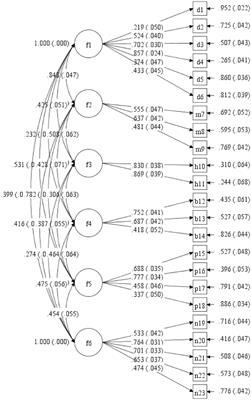
Validation of the sleep disturbance scale for children (SDSC) in infants and toddlers from mainland China
Source : https://www.frontiersin.org/articles/10.3389/fpsyt.2022.987304/full
The sleep disturbance scale for children (SDSC) has been validated in the population of Chinese children (aged 5-16 years) and has good psychometric properties.
Conclusions: Our study provides evidence that the SDSC-I is reliable and valid, and it is effective for the screening and management of sleep disturbances among infants (aged 6–36 months). Compared with other questionnaires such as the Brief Infant Sleep Questionnaire (BISQ), it is worthy of popularization and application in pediatric primary...
-
Sleep Disorder Connect3yrKey Points • Source: Frontiers in Psychiatry • Conclusion: “Our study provides evidence that the SDSC-I [Sleep Disturbance Scale for Children for Chinese Infants] is reliable and valid, and it is effective for the Show More

The Treatment of Parkinson's Disease with Sodium Oxybate
Source : https://www.eurekaselect.com/article/127369
Sodiun Oxybate [SO] has a number of attributes that may mitigate the metabolic stress on the substantia nigra pars compacta [SNpc] dopaminergic [DA] neurons in Parkinson's disease [PD]. These neurons...
Conclusions: The acute clinical use of SO at night has been shown to reduce daytime sleepiness and fatigue in patients with PD. With long-term use, its capacity to supply energy to DA neurons, impede synuclein transmission, block excitotoxicity and maintain an anti-oxidative redox environment throughout the night may postpone the onset of PD and...

Differentiation of central disorders of hypersomnolence with manual and artificial-intelligence-derived polysomnographic measures - PubMed
Source : https://pubmed.ncbi.nlm.nih.gov/36455881/
Differentiation of central disorders of hypersomnolence (DOH) is challenging but important for patient care. This study aimed to investigate whether biomarkers derived from sleep structure evaluated both by manual scoring...
Conclusions/Relevance: The results confirm previous findings on sleep instability in NT1 patients and show that combining manual and automatic AI-based sleep analysis could be useful for better distinction of NT2 from IH, but no precise sleep biomarker of NT2 or IH could be identified. Validation in a larger and multi-centric cohort is needed...