


3yr
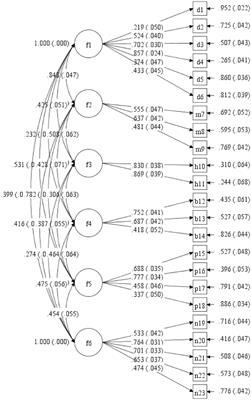
Validation of the sleep disturbance scale for children (SDSC) in infants and toddlers from mainland China
Source : https://www.frontiersin.org/articles/10.3389/fpsyt.2022.987304/full
The sleep disturbance scale for children (SDSC) has been validated in the population of Chinese children (aged 5-16 years) and has good psychometric properties.
Conclusions: Our study provides evidence that the SDSC-I is reliable and valid, and it is effective for the screening and management of sleep disturbances among infants (aged 6–36 months). Compared with other questionnaires such as the Brief Infant Sleep Questionnaire (BISQ), it is worthy of popularization and application in pediatric primary care.
• Source: Frontiers in Psychiatry
• Conclusion: “Our study provides evidence that the SDSC-I [Sleep Disturbance Scale for Children for Chinese Infants] is reliable and valid, and it is effective for the screening and management of sleep disturbances among infants (aged 6–36 months). Compared with other questionnaires such as the Brief Infant Sleep Questionnaire (BISQ), it is worthy of popularization and application in pediatric primary care.”
• Chinese researchers assessed the psychometric validity of the Sleep Disturbance Scale for Children (SDSC) in infants and toddlers aged between 6 and 36 months. The SDSC could help pediatricians screen and diagnose sleep disorders in young children in community hospitals. The SDSC was previously validated in Italian and French cohorts.
• The questionnaire consisted of questions about the occurrence of sleep disturbance during the past 6 months, with each item scored using a 5-point Likert scale. Mothers responded on behalf of their children and provided sociodemographic data.
• One limitation of the current study is that the sensitivity and specificity of the scale could not be calculated due to the absence of a patient group with sleep disorders. The data gathered by the researchers on sleep disorder rates among children was not epidemiologic. Another limitation was that the patients’ parents may not have been aware of the child’s sleep issues due to various cultural, familial, and social factors.
• “This scale is useful for screening and detection of sleep disturbances in pediatric primary care and is worthy of popularization and application. This study is the first step to applying the SDSC to Chinese infants, and further research is needed to provide a more in-depth assessment of sleep disorders like polysomnography or actigraphy,” the authors wrote.