



An overview of the effects of levodopa and dopaminergic agonists on sleep disorders in Parkinson's disease - PubMed
Source : https://pubmed.ncbi.nlm.nih.gov/36716191/
Sleep disorders are among the most common non-motor symptoms in Parkinson's disease (PD) and are associated with reduced cognition and health-related quality of life. Disturbed sleep can often present in...
Conclusions: In this review, we discuss the role of dopamine in regulating the sleep-wake state and the impact of neurodegeneration on sleep. We provide an overview of the effects of levodopa and dopaminergic agonists on sleep architecture, insomnia, excessive daytime sleepiness, sleep-disordered breathing, rapid eye movement sleep behavior...

Suvorexant, a Novel Dual Orexin Receptor Antagonist, for the Management of Insomnia - PubMed
Source : https://pubmed.ncbi.nlm.nih.gov/36726477/
Insomnia is a major public health concern that affects many people worldwide and has been linked to many adverse health outcomes. While there are existing treatments that target different receptors...
Conclusions: Insomnia is a major public health concern that affects many people worldwide and has been linked to many adverse health outcomes. While there are existing treatments that target different receptors and pathways of normal sleep induction and maintenance, Suvorexant is a novel drug that targets dual orexin receptors. Its safety and...

Excessive daytime sleepiness in a model of Parkinson's disease improved by low-frequency stimulation of the pedunculopontine nucleus - npj Parkinson's Disease
Source : https://www.nature.com/articles/s41531-023-00455-7
Patients with Parkinson's disease often complain of excessive daytime sleepiness which negatively impacts their quality of life. The pedunculopontine nucleus, proposed as a target for deep brain stimulation to improve...
Conclusions: Indeed, low-frequency stimulation of the pedunculopontine nucleus area induced a significant increase in sleep onset latency, longer continuous periods of wakefulness and thus, a partially restored daytime wake architecture. These findings may contribute to the development of new therapeutic strategies in patients suffering from...
-
Dr Hamid3yrPatients with Parkinson’s disease often complain of excessive daytime sleepiness which negatively impacts their quality of life
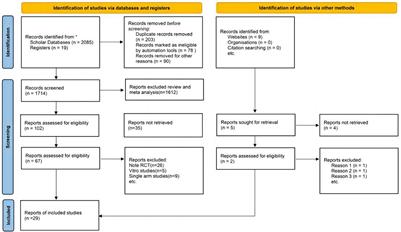
Orexin dual receptor antagonists, zolpidem, zopiclone, eszopiclone, and cognitive research: A comprehensive dose-response meta-analysis
Source : https://www.frontiersin.org/articles/10.3389/fnhum.2022.1029554/full
BackgroundAbout one-third of adults have trouble sleeping, ranging from occasional difficulty to chronic insomnia, along with difficulty maintaining sleep. Many studies reported that the long-term use of hypnotics can cause...
Conclusions: We recommend DORA as the best intervention for insomnia because it is highly effective in inducing and maintaining sleep without impairing cognition. Although zolpidem has a more pronounced effect on maintaining sleep, it is best to reduce its use because of its side effects. Eszopiclone and zopiclone improved sleep quality, but...

Efficacy and tolerability of pharmacological treatments for insomnia in adults: A systematic review and network meta-analysis
Source : https://www.sciencedirect.com/science/article/abs/pii/S1087079223000023?via=ihub
Insomnia is one of the most common and burdensome disorders in adults. We compared and ranked insomnia medication on the basis of their efficacy and tolerability. We performed a systematic...
Conclusions: Insomnia medications differ in their efficacy and tolerability. ORAs have superior efficacy and tolerability. These findings should aid clinicians in matching risk/benefits of drugs available in their countries to insomnia symptoms.