


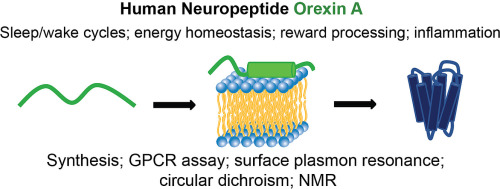
Orexin A, an amphipathic α-helical neuropeptide involved in pleiotropic functions in the nervous and immune systems: Synthetic approach and biophysical studies of the membrane-bound state
Source : https://www.sciencedirect.com/science/article/pii/S0301462223000583?via=ihub
Orexin A, a neuropeptide involved in multiple vital functions, activates G-protein coupled receptors in neural and immune cell membranes. * Structure-activity relationship studies of orexin A provide knowledge essential to...
Conclusions/Relevance: This new knowledge about structure-activity relationships in OXA could inspire the design of novel therapeutics that leverage the anti-inflammatory and neuro-protective functions of OXA, and therefore could help address neuroinflammation, a major issue associated with neurological disorders such as Alzheimer's disease.

Effects of light therapy on sleep/wakefulness, daily rhythms, and the central orexin system in a diurnal rodent model of seasonal affective disorder
Source : https://www.sciencedirect.com/science/article/abs/pii/S0165032723004688?via=ihub
Bright light therapy (BLT) is the first-line treatment for seasonal affective disorder. However, the neural mechanisms underlying BLT are unclear. To begin filling this gap, the present study examined the...
Conclusions: The diurnal grass rats show similar behavioral responses to BLT as humans, thus could be a good model for further elucidating the neural mechanisms underlying the therapeutic effects of BLT.

The orexin story and orexin receptor antagonists for the treatment of insomnia - PubMed
Source : https://pubmed.ncbi.nlm.nih.gov/37086045/
Insomnia is present in up to one third of the adult population worldwide, and it can present independently or with other medical conditions such as mental, metabolic, or cardiovascular diseases,...
Conclusions/Relevance: This review provides an overview of the orexin history, the mechanism of action, the relation to insomnia, and key features of available drugs mediating orexin signalling.
Internal and external modulation factors of the orexin system (REVIEW)
Source : https://www.sciencedirect.com/science/article/abs/pii/S0196978123000712?via=ihub
Orexin-A and -B (identical to hypocretin-1 and -2) are synthesized in the neurons project their broadly throughout the entire central nervous system (CNS). The activity of orexins is mediated by...
Conclusions/Relevance: In this review, we summarize the modulating factors of orexin neurons in the feeding behavior, energy homeostasis, circadian rhythm, body fluid regulation and nutritional factors (Fig. 1). Further understanding of such modulating mechanisms of the orexin system will contribute to the control of sleep/wakefulness,...
-
Sleep Disorder Connect3yrKey Points • Source: Peptides • Conclusions/Relevance: “In this review, we summarize the modulating factors of orexin neurons in the feeding behavior, energy homeostasis, circadian rhythm, body fluid regulation and nutritional factors. Further understanding Show More

Nicotine, alcohol, and caffeine use among individuals with untreated obstructive sleep apnea - Sleep and Breathing
Source : https://link.springer.com/article/10.1007/s11325-023-02830-3
Background Psychoactive substance use (i.e., nicotine, alcohol, and caffeine) has substantial effects on sleep architecture in healthy individuals, but their effects in those with obstructive sleep apnea (OSA) have not...
Conclusions: Psychoactive substance use is associated with sleep characteristics and clinically relevant correlates in people with untreated OSA. Further investigation into the effects that various substances have on this population may present opportunities to understand disease mechanisms more fully and increase the effectiveness of...