



Driving Performance after Bedtime Administration of Daridorexant, Assessed in a Sensitive Simulator
Source : https://www.ncbi.nlm.nih.gov/pmc/articles/PMC9320895/
Clinical Pharmacology and Therapeutics Clemens Muehlan, 1 , 1 Sander Brooks, 2 , 3 , 1 Cedric Vaillant, 4 Michael Meinel, 5 Gabriël E. Jacobs, 2 , 6 Rob G....
Conclusion/Relevance: Daridorexant showed a lower self-rated driving quality and higher effort compared to placebo on day 2 but not on day 5. In non-insomnia subjects, daridorexant impaired simulated driving after initial but not after repeated dosing. Subjects should be cautioned about driving until they know how daridorexant affects them.

Sleep spindle and slow wave activity in Parkinson disease with excessive daytime sleepiness - PubMed
Source : https://pubmed.ncbi.nlm.nih.gov/35877159/
Our data suggest that daytime sleepiness in PD patients is associated with sleep disturbance revealed by quantitative EEG, namely reduced overnight SWA decline and reduced spindle frequency activity. These findings...
Conclusions: Our data suggest that daytime sleepiness in PD patients is associated with sleep disturbance revealed by quantitative EEG, namely reduced overnight SWA decline and reduced spindle frequency activity. These findings could indicate that poor sleep quality, with incomplete dissipation of homeostatic sleep pressure, may contribute to...
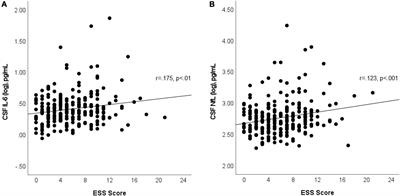
Sleepiness in Cognitively Unimpaired Older Adults Is Associated With CSF Biomarkers of Inflammation and Axonal Integrity
Source : https://www.frontiersin.org/articles/10.3389/fnagi.2022.930315/full
IntroductionSleepiness has been associated with cognitive decline and dementia in the elderly. Older adults with excessive daytime sleepiness appear to be more vulnerable to longitudinal amyloid PET accumulation before the...
Conclusion: Sleepiness was associated with greater CSF IL-6 and NfL levels, which could contribute to neurodegeneration or alternatively cause sleepiness. Higher NfL levels may result from sleep disruption and/or contribute to sleepiness via disturbed connectivity or damage to wake-promoting centers. Associations between sleepiness and...

Correlates of excessive daytime sleepiness in obstructive sleep apnea: Results from the nationwide SESAR cohort including 34,684 patients - PubMed
Source : https://pubmed.ncbi.nlm.nih.gov/35869576/
Excessive daytime sleepiness (EDS) is a hallmark symptom in obstructive sleep apnea (OSA). It is commonly eliminated by obstructive sleep apnea therapy and constitutes a major treatment indication. This study...
Conclusion/Relevance: The oxygen desaturation index provided a stronger predictor of excessive daytime sleepiness than the apnea-hypopnea index. The severity of obstructive sleep apnea, captured as the apnea-hypopnea index, was only weakly associated with daytime sleepiness in this representative obstructive sleep apnea patient cohort. Age had...
Sleep Dysfunction in Movement Disorders: a Window to the Disease Biology - Current Neurology and Neuroscience Reports
Source : https://link.springer.com/article/10.1007/s11910-022-01220-8
Purpose of Review To comprehensively summarize the sleep pathologies associated with movement disorders, focusing on neurodegenerative diseases. Recent Findings Mounting evidence has further implicated both sleep and circadian disruption in...
Summary: Many movement disorders are associated with sleep and circadian rhythm disruption. Motor symptoms can cause sleep fragmentation, resulting in insomnia and excessive daytime sleepiness. Many neurodegenerative movement disorders involve brainstem pathology in regions close to or affecting nuclei that regulate sleep and wake. Further,...