



Nocturnal Vestibular Stimulation Using a Rocking Bed Improves a Severe Sleep Disorder in a Patient With Mitochondrial Disease
Source : https://pubmed.ncbi.nlm.nih.gov/38499951/
Mitochondrial diseases are rare genetic disorders often accompanied by severe sleep disorders. We present the case of a 12-year-old boy diagnosed with a severe primary mitochondrial disease, exhibiting ataxia, spasticity,...
In the final 4-week intervention, sleep duration increased by 25%, required caregiver interactions reduced by 75%, and caregiving time decreased by 40%.
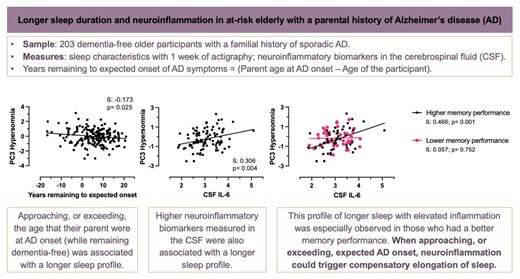
Longer Sleep Duration and Neuroinflammation in At-Risk Elderly With a Parental History of Alzheimer's Disease
Source : https://academic.oup.com/sleep/advance-article/doi/10.1093/sleep/zsae081/7634522?login=false
AbstractStudy Objectives. While short sleep could promote neurodegeneration, long sleep may be a marker of ongoing neurodegeneration, potentially as a resu
Proximity to, or exceeding, expected age of onset was associated with a sleep profile suggestive of hypersomnia (longer sleep, later morning awakening time).

Perceived Childhood Neighborhood Safety and Sleep Health During Childhood and Adulthood Among a Cohort of African American Women
Source : https://pubmed.ncbi.nlm.nih.gov/38531166/
Four percent of participants reported an unsafe neighborhood at age 5 years, only, and 12% reported an unsafe neighborhood at all ages. Participants in perceived unsafe vs. safe neighborhoods at...
Perceived unsafe childhood neighborhood was associated with poorer sleep over the life course and may serve as an early intervention target.
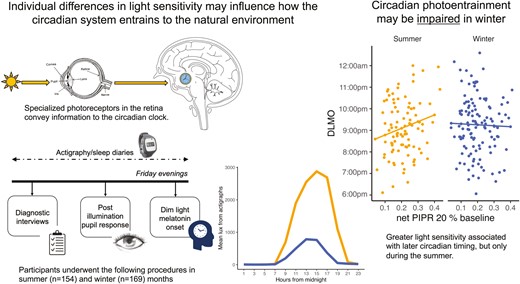
Circadian Photoentrainment Varies by Season and Depressed State: Associations Between Light Sensitivity and Sleep and Circadian Timing
AbstractStudy Objectives. Altered light sensitivity may be an underlying vulnerability for disrupted circadian photoentrainment. The photic information nec
Light sensitivity was associated with circadian alignment only in participants with minimal depression.

An Expedited Model for Identifying Potential Patients With Periodic Leg Movements
Source : https://pubmed.ncbi.nlm.nih.gov/38500205/
Periodic leg movements during sleep (PLMS) may have crucial consequences in adults. This study aimed to identify baseline characteristics, symptoms, or questionnaires that could help to identify sleep-disordered breathing patients...
This analysis identified significant risk factors for periodic leg movements during sleep, including age >50 years, self-reported insomnia, and lower daytime sleepiness levels.