


3-D Comparison of Upper Airway Volume, Shape, and Airway Related Features in Patients of Different Vertical Skeletal Classification With or Without Excessive Daytime Sleepiness
Source : https://digitalscholarship.unlv.edu/thesesdissertations/4135/
Objectives: To compare the airway volume, the airway minimum cross-section area, the airway shape, and the airway related features to vertical growth pattern classifications in subjects with or without excessive...
Conclusions: There are significant differences between vertical skeletal classification and minimum cross-sectional airway area and hyoid to mandibular plane measurements. Total airway volume has a positive relationship to the hyoid to mandibular plane measurement. Sleepiness classified by the Epworth Sleepiness Scale was not a significant...

Gut Microbiota in Patients with Type 1 Narcolepsy | NSS
Narcolepsy is a rare sleep disorder characterized by excessive daytime sleepiness, cataplexy, sleep paralysis, and sleep hallucinations. Some patients may develop nocturnal sleep disturbance, obesity, mental and emotional disorders, and...
Conclusion: Our data revealed differences in intestinal flora structure between NT1 patients and the normal population, thus providing a theoretical basis for future microecological therapy for narcolepsy. However, future larger sample size studies and different study designs are needed to further clarify the possible pathogenesis and...
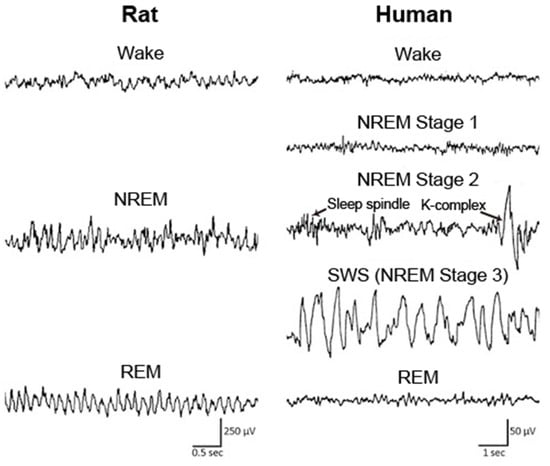
Association between Sleep, Alzheimer's, and Parkinson's Disease
Source : https://www.mdpi.com/2079-7737/10/11/1127/html
The majority of neurodegenerative diseases are pathologically associated with protein misfolding and aggregation. Alzheimer's disease (AD) is a type of dementia that slowly affects memory and cognitive function, and is...
This suggests that sleep abnormalities may be a potential biomarker of these diseases. In this review, we describe the alterations of sleep in AD and PD, and discuss their potential in the early diagnosis of these diseases. We further discuss whether sleep disturbance could be a target for the treatment of these diseases.

CSF Profile and Hypocretin in Children with Narcolepsy
Source : https://www.thieme-connect.com/products/ejournals/abstract/10.1055/s-0041-1739689
Background/Purpose: Narcolepsy is a rare autoimmune disease of hypocretin-producing neurons. Decreased hypocretin concentrations in CSF are an important diagnostic marker. In adults, a value <110 pg/mL is considered pathological, and...
Conclusion: Children with narcolepsy showed significantly lower hypocretin levels in CSF than the comparison cohort. Thus, the hypocretin threshold of 110 pg/mL is also a good marker for narcolepsy in children and may be helpful with the diagnosis. In the extended CSF diagnostics, neither intrathecal antibodies against pathogens nor...
CONCLUSIONS: Participants with EDS had a higher health-related BOI vs those without EDS; their sleepiness often prevented physical activity and drove caffeine use to stay awake. Further research is needed to understand how improving EDS may improve health-related behaviors or outcomes in CPAP-treated patients with OSA.