




Sleep Disorder Connect
  • Saved
Effect of FT218, a Once-Nightly Sodium Oxybate Formulation, on Disrupted Nighttime Sleep in Patients with Narcolepsy: Results from the Randomized Phase III REST-ON Trial - CNS Drugs

Effect of FT218, a Once-Nightly Sodium Oxybate Formulation, on Disrupted Nighttime Sleep in Patients with Narcolepsy: Results from the Randomized Phase III REST-ON Trial - CNS Drugs

Source : https://link.springer.com/article/10.1007/s40263-022-00904-6

Background Sodium oxybate has been recognized as a gold standard for the treatment of disrupted nighttime sleep due to narcolepsy. Its short half-life and immediate-release formulation require patients to awaken...


Conclusions: The clinically beneficial, single nighttime dose of ON-SXB significantly improved disrupted nighttime sleep in patients with narcolepsy.

  • Saved
Orexin enhances neuronal synchronization in adult rat hypothalamic culture: A model to study hypothalamic function - PubMed

Orexin enhances neuronal synchronization in adult rat hypothalamic culture: A model to study hypothalamic function - PubMed

Source : https://pubmed.ncbi.nlm.nih.gov/35353632/

doi: 10.1152/jn.00041.2022. Online ahead of print. 1 Research Service, Veterans Affairs Health Care System, Minneapolis, MN, United States. 2 Brain Sciences Center, Veterans Affairs Health Care System, Minneapolis, MN, United...


Conclusions: These results support that adult rat hypothalamic-cultures could be used as a model to study the mechanisms underlying obesity. In addition, LH administration of OXA enhanced wakefulness, indicating that OXA enhances wakefulness partly by promoting neural-synchrony in the hypothalamus.

  • Saved
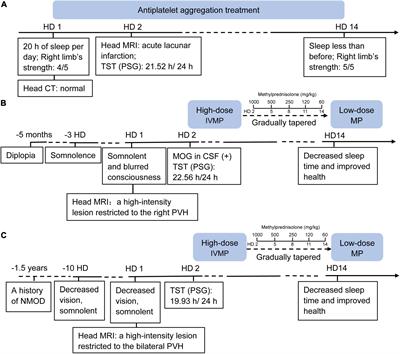
Case Report: Dysfunction of the Paraventricular Hypothalamic Nucleus Area Induces Hypersomnia in Patients

Case Report: Dysfunction of the Paraventricular Hypothalamic Nucleus Area Induces Hypersomnia in Patients

Source : https://www.frontiersin.org/articles/10.3389/fnins.2022.830474/full

BackgroundHypersomnia is a common and highly impairing symptom marked by pathological excessive sleepiness, which induces suboptimal functioning and poor quality of life. Hypersomnia can be both a primary (e.g., hypersomnolence...


Conclusion: Our findings suggest that the PVH may play an essential role in the occurrence of hypersomnia.

  • Saved
Suvorexant in the Treatment of Difficulty Falling and Staying Asleep (Insomnia) - PubMed

Suvorexant in the Treatment of Difficulty Falling and Staying Asleep (Insomnia) - PubMed

Source : https://pubmed.ncbi.nlm.nih.gov/35342199/

Multiple clinical studies support the use of suvorexant in insomnia. In primary insomnia, suvorexant is effective (over placebo), as measured by polysomnography and reported by patients, in both attaining and...


Summary: Multiple clinical studies support the use of suvorexant in insomnia. In primary insomnia, suvorexant is effective (over placebo), as measured by polysomnography and reported by patients, in both attaining and maintaining sleep. Similar, albeit to a smaller degree, results were found in secondary insomnia. Suvorexant carries two...

  • Saved

made a Post

Insomnia Treatments

Don’t lose sleep over it is a common phrase, yet many people seem unable to take this advice as occasional, short-term insomnia affects 30-50% of the population. In industrialized nations, chronic insomnia, with insomnia lasting 3 months or more, has a prevalence of 5-10%. Patients that have medical problems or psychiatric illness experience a greater rate of insomnia. All patients with insomnia are potentially affected by increased risk factors of impaired daytime functioning, substance abuse, mood disorders, chronic pain, as well as other medical diseases, including high blood pressure, dementia, and obesity being associated with insomnia. Given the tremendous burden insomnia places on individuals and society, treatment is a necessity. Both non-pharmacological, cognitive therapy, and pharmacological treatments are available. While cognitive therapy is considered the first choice of treatment, there are also a variety of pharmacological treatments that are used: Benzodiazepines, Non-benzodiazepines, Melatonin agonists, Heterocyclics, Anticonvulsants, and Orexin receptor antagonists.


What have you found to be the pros and cons of the various options?


References


  • Sateia, M., Buysse, D., Krystal, A., Neubauer, D., and Heald, J., 2017. Clinical Practice Guideline: Insomnia. Journal of Clinical Sleep Medicine, Vol. 13, No. 2, 2017, p. 307-349. https://doi.org/10.5664/jcsm.6470